Cleanroom accessories: Cleanroom furniture

Contents

When furnishing your cleanrooms, it is important to remember that commercially available furniture is not sufficient due to inadequate hygiene properties and particle emission. Even furniture that complies with food industry standards does not meet the requirements of higher cleanroom classes. Below you will find assistance to help you select suitable furniture.

By definition, a cleanroom is a room in which the concentration of airborne particles or germs is kept very low. The cleanroom is constructed in such a way that the number of particles that are introduced into the room or that are created there is as low as possible. Cleanroom technology consistently ensures stable, constant and controllable temperature, humidity and pressure conditions.

Cleanrooms are a "must-have" in many sectors, such as medical technology, healthcare, microelectronics, optics and laser technology.
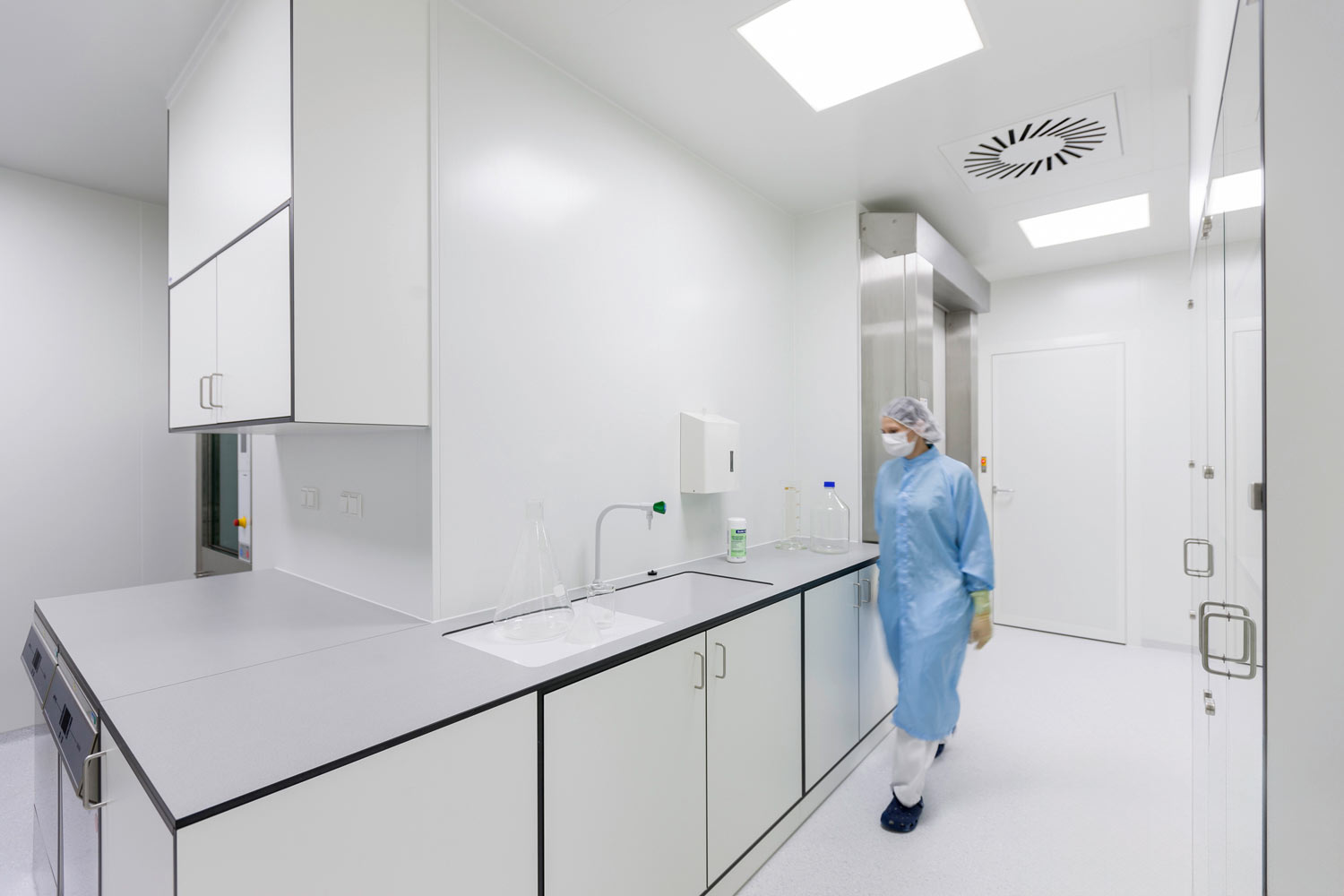
The following furniture can be found in the cleanroom:

  • Personnel airlocks (lockers, sit-over benches, shoe lockers, dispensers for various cleanroom clothing, waste garbage cans ...),
  • Forcibly guided hygiene sluices (with and without access control),
  • Cleanroom shelving, cabinets,
  • Tables, writing desks, microscope (low-vibration), weighing, measuring and rinsing tables,
  • Chairs and standing aids,
  • Cleanroom transport trolley,
  • individual solutions on customer request.
comprei and Sailer, cleanroom equipment

How do you recognize cleanroom-compatible furniture?

Cleanroom-compatible materials

Important factors are low particle emission, chemical and microbiological resistance and hydrophobic properties. Chemical resistance to common cleaning agents and disinfectants is an important differentiator from furniture for use outside the cleanroom. There are certificates for HPL and stainless steel that confirm that they are permanently resistant to standard cleaning agents and disinfectants. Furniture made of chipboard up to RR class ISO 7 is permissible, although not ideal, because any minor damage can lead to the release of particles. Repeated contact with cleaning agents also leads to a change in the surface (it becomes rough and therefore no longer suitable for cleanrooms). We therefore recommend the use of stainless steel or HPL throughout for cleanroom-compatible furniture from class 8 or D.

Stainless steel:

(Oberflächenrauheit < 0,8μm) ist hier state of the art. In höheren Reinraumklassen sollte die Edelstahloberfläche elektropoliert sein, um Partikeln und Keimen eine geringe Angriffsfläche zu bieten. Der Vorteil von Edelstahl ist seine Langlebigkeit, er ist leicht zu reinigen, und Sie können aus verschiedenen Legierungen, entsprechend den Anforderungen, auswählen (z. B. erfordert VE-Wasser mindestens V4A Materialqualität für den dauerhaften Einsatz). Ein weiterer Vorteil ist sein geringeres Ausgasverhalten. Natürlich müssen auch alle anderen Bestandteile des Reinraummöbels (Dichtungen, Funktionselemente) diesen Anforderungen entsprechen.

HPL - High Pressure Laminate:

Due to its functionality, this material meets the highest requirements in cleanroom applications such as microelectronics, pharmaceuticals and life science.

HPL has the following properties:

  • Very high stability and impact resistance
  • Good workability (can be processed in a similar way to wood)
  • High resistance to cleaning agents, disinfectants and chemicals
  • Water and moisture resistance

Cleanroom-compatible processing

Their cleanroom-compatible surface should have no gaps or dead spaces, be easy to clean and have no indentations. The requirements generally known under the umbrella term "hygienic design" can be used as a selection criterion here. Hygienic design refers to the design of parts, components and production systems to make them suitable for cleaning.

These 5 points should be taken into account when designing cleanroom-compatible furniture:

  • Tightly sealed or welded constructions prevent dead spaces and hard-to-reach areas in which liquids, germs or particles can collect.
  • All open areas, including interiors, are easily accessible with cleaning agents and disinfectants.
  • Large radii at transitions and seamless pipe connections make cleaning easier and prevent the build-up of particles and germs on edges and in joints.
  • The use of hygienic slopes on surfaces that do not have to be horizontal for functional reasons reduces the risk of unwanted deposits.
  • Avoidance of flow disturbances, trouble-free flow around closed components

comprei, the expert for contamination control in cleanrooms, only works with reputable manufacturers who have complete documentation of the materials used and are able to provide the required quality for your cleanroom. We will be happy to advise you on the selection and planning of your cleanroom in order to ensure its economical and safe operation.

Writing materials

Carefully selected writing materials suitable for cleanrooms contribute to contamination control in the cleanroom. You can find more information on writing paper, pens and labels here.

Maintenance (Maintanance)

Regular maintenance and care, including cleaning, requires special attention for cleanroom furniture, as this has a significant influence on the service life and safety of the investment. The aim is to ensure simple, safe and fast Cleaning all surfaceswithout damaging or altering them. The cleaning agents and disinfectants specified in the SOP should be compared with the material manufacturer's resistance lists. Some chemicals (especially oxygen releasers) lead to unsightly color changes. This can be avoided by removing the chemicals from the surface after the exposure time with a liquid that is suitable for the cleanroom class. Furniture manufacturers provide cleaning and care instructions; these should be integrated into the in-house SOPs (warranty claim). EU GMP Annex 1 requires the surface to be checked for residues and these to be removed if necessary.

Summary

Cleanroom furniture differs from standard furniture, but also from furniture for the food industry, due to the use and requirements of a cleanroom. Stainless steel and HPL are best suited to the various regulations. Stainless steel and HPL furnishings, which are consistently designed according to hygienic design guidelines, are particularly easy to clean. Closed constructions and defined surface properties, together with hygienic slopes, ensure that accumulations of particles and germs are avoided. Hidden contamination risks are eliminated. We at comprei look forward to working with you to define the right furniture!

Cleanroom particle containment mats: Effective protection for your sensitive cleanroom!

Particle containment mats (also known as cleanroom adhesive mats / dust control mats) are a crucial element in maintaining cleanliness in sensitive working environments. But why should particle containment mats be used?

Why particle retention mats?

In cleanrooms and other controlled environments, minimizing particles is of paramount importance. Particles can not only affect the quality of your products, but can also disrupt the production process and lead to costly downtime. Particle containment mats provide an effective solution to reduce the ingress of dirt and contaminants by removing particles as they enter the cleanroom. This helps to maintain the cleanroom class and increases overall production efficiency.

Advantages and disadvantages of tear-off mats compared to permanent adhesive mats from Dycem:

  • Easy installation and maintenance: Tear-off mats can be installed quickly and easily without special tools or specialist knowledge. Unlike permanent adhesive mats, they do not need to be cleaned. By simply tearing off and replacing the used film, your cleanroom environment remains clean and protected at all times. When removing the used film, numerous particles can be released into the environment if not handled correctly (studies estimate that up to 215,000 particles are released). We have created a video that shows how to properly tear off the top film to minimize the release of particles.
  • Adhesive: Tear-off mats release adhesive residue into the cleanroom behind them via the soles of shoes and wheels rolling over them. This requires recurring basic cleaning of the cleanroom floor (the cleanroom floor becomes sticky).
  • Correct use of the tear-off mats: In order to achieve the most efficient cleaning of the shoe soles and wheels, at least 6 steps (3 steps per foot) or 3 complete rotations of the rollers should be carried out on the cleanroom adhesive mat. For this purpose, several particle retention mats should be laid out one behind the other. Permanently adhesive particle containment mats are easier to adapt to your requirements. They can be easily cut and adapted to your specific requirements, ensuring maximum flexibility and adaptability. Sample examples in the image below.

Permanently adhesive particle retention mats

Particle retention mats (also known as cleanroom adhesive mats) from comprei - cleanliness that lasts.
Innovative solutions for retaining dirt and particles - efficient, sustainable, customizable.

Permanently adhesive particle retention mat from comprei

What is a particle retention mat?

Brief introduction:
A particle retention mat (also known as a cleanroom adhesive mat for cleanroom airlocks) is a special mat for removing and retaining fine to coarse dirt particles from shoes or wheels in front of sensitive areas. It is used in particular in industries such as pharmaceuticals, semiconductor technology, cleanrooms, laboratories and food production.

Contamination control mats are made from a patented polymer composition that is durable and adhesive by nature. This mat has a proven ability to attract, bind and retain up to 99.9% of contaminants transferred from shoes and wheels and up to 75% of airborne particles. In addition to these special performance features, the system is easy to clean and has a long service life (more than 5 years with good care). This makes the system a cost-effective solution for contamination control in cleanrooms.

Advantages at a glance:

  • Simple and effective reduction of particle entry into your cleanroom
  • Compliance with hygiene and safety regulations
  • Forced guidance of personnel (the steps required to decontaminate the sole of the shoe cannot be bypassed as easily as with tear-off mats)
  • Protects the high investment in your cleanroom from contamination (due to particles and adhesive residue on the soles of shoes)
Use of the contamination control mat, particle retention mat for the cleanroom

Why should you use a particle retention mat?

Relevance and benefits:

  • Hygiene-critical areas: prevents the introduction of microorganisms and dust.
  • Cost-efficient: saves on cleaning and maintenance costs. Very long service life (at least 5 years with correct care)
  • Work safety: reduces the risk of slipping thanks to dry and clean floors.
  • Conformity to standards: fulfills industry-specific requirements, e.g. GMP, ISO classes.
Demolition mats from comprei. Simple and effective reduction of particle entry into your cleanroom.
Simple and effective reduction of particle entry into your cleanroom.

How is a particle retention mat cleaned?

Easy to clean and durable:

Note: Regular care maintains the retention function and significantly extends the service life. In the video we show you how to clean the mat correctly. On request, we can also show or train your staff how to clean the mat correctly on site. Please make an appointment via our contact form.

Practical examples:
This is what an installed particle retention mat looks like.

Cleanroom permanent adhesive mat Installation
Particle retention mats are a cost-effective solution for contamination control in cleanrooms

What is the difference between tear-off adhesive mats and permanently adhesive particle retention mats?

7 advantages why you should say goodbye to your tear-off mats:

  1. With tear-off mats, only 25% of the particles are removed from the feet or wheels. In contrast, the Dycem CleanZone mat removes 99.9%. Significantly more particles are retained from your cleanroom.
  2. If the same area is walked on several times, the retention force of the tear-off mat is reduced by a further 50%. In contrast, the retention force of the Dycem CleanZone mat remains almost completely intact.
  3. Tear-off mats disperse up to 215,000 particles in your sensitive cleanroom when the adhesive layer is changed. Dycem CleanZone, on the other hand, provides safe and controlled removal of the particles.(Watch this video to see how to correctly remove a soiled tear-off mat film). 
  4. Demolition mats produce a large amount of waste. Dycem CleanZone mats, on the other hand, can be used for many years, thereby reducing your CO2 footprint.
  5. Demolition mats cannot be driven over with forklifts. Dycem mats, on the other hand, are also available in a forklift-compatible version.
  6. Tear-off mats leave adhesive residue on users' feet, which should be removed from your cleanroom at regular intervals. In contrast, the Dycem CleanZone mat works with the Van der Waals forces and remains effective for many years (5-year service life).
  7. Demolition mats have to be purchased regularly. This requires storage capacity and resources in merchandise management. On the other hand, it is a one-off investment that pays for itself after a relatively short time (we would be happy to make this calculation with your key data, please contact us).

The parameters speak for particle retention mats from comprei. We would be happy to provide you with a free quote. Simply contact us.

Conclusion

Durable particle containment mats offer superior performance in terms of effectiveness, sustainability and long-term cost savings compared to disposable adhesive mats. They are the optimal choice for companies striving for the highest standards in contamination control.

Online contact

Learning solutions for the pharmaceutical industry, GMP

Clean room cuboid

Realistic simulations and visualizations of activities make invisible connections visible. Learners experience their own impact in the cleanroom right in the middle of the action. They experience in-depth sensitization that becomes firmly anchored.