When cleaning in the cleanroom, special requirements (e.g. particle emission, ESD suitability and chemical resistance to the listed cleaning agents/disinfectants) apply in addition to the generally applicable approaches to cleaning. These include, among others:
It should also be noted that manual cleaning is time-consuming and the working time factor in cleaning is the most cost-intensive part. A comparison of cleaning with a mop and a scrubber-dryer can be cited as an example. The machine can clean 7 times the area in the same time while maintaining the same quality. Manual cleaning is also subject to fluctuations, as this activity is often carried out by different employees, making it difficult to achieve reproducible quality (but this is a GMP requirement). Therefore, automated cleaning should always be considered and subjected to an objective assessment.
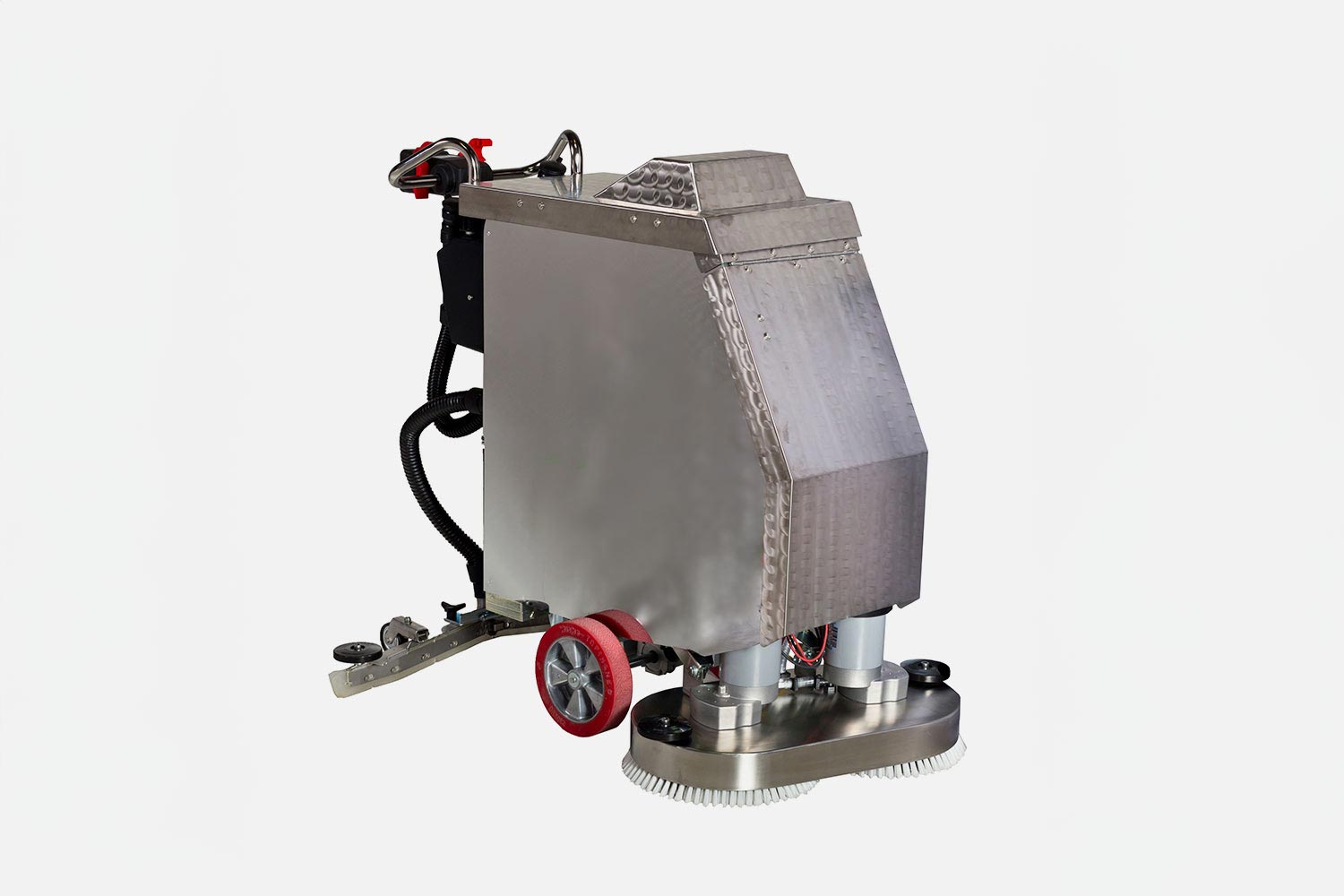
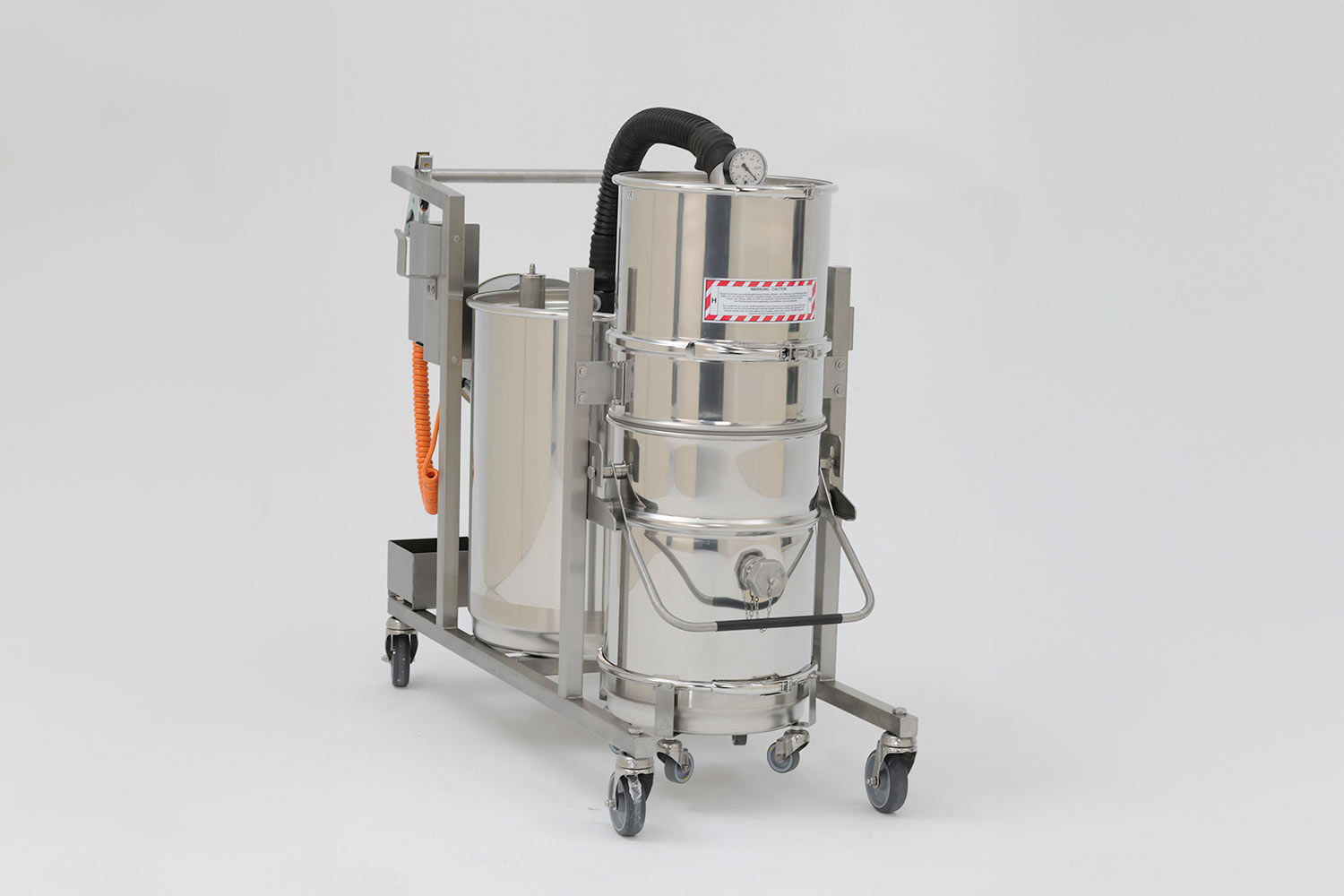
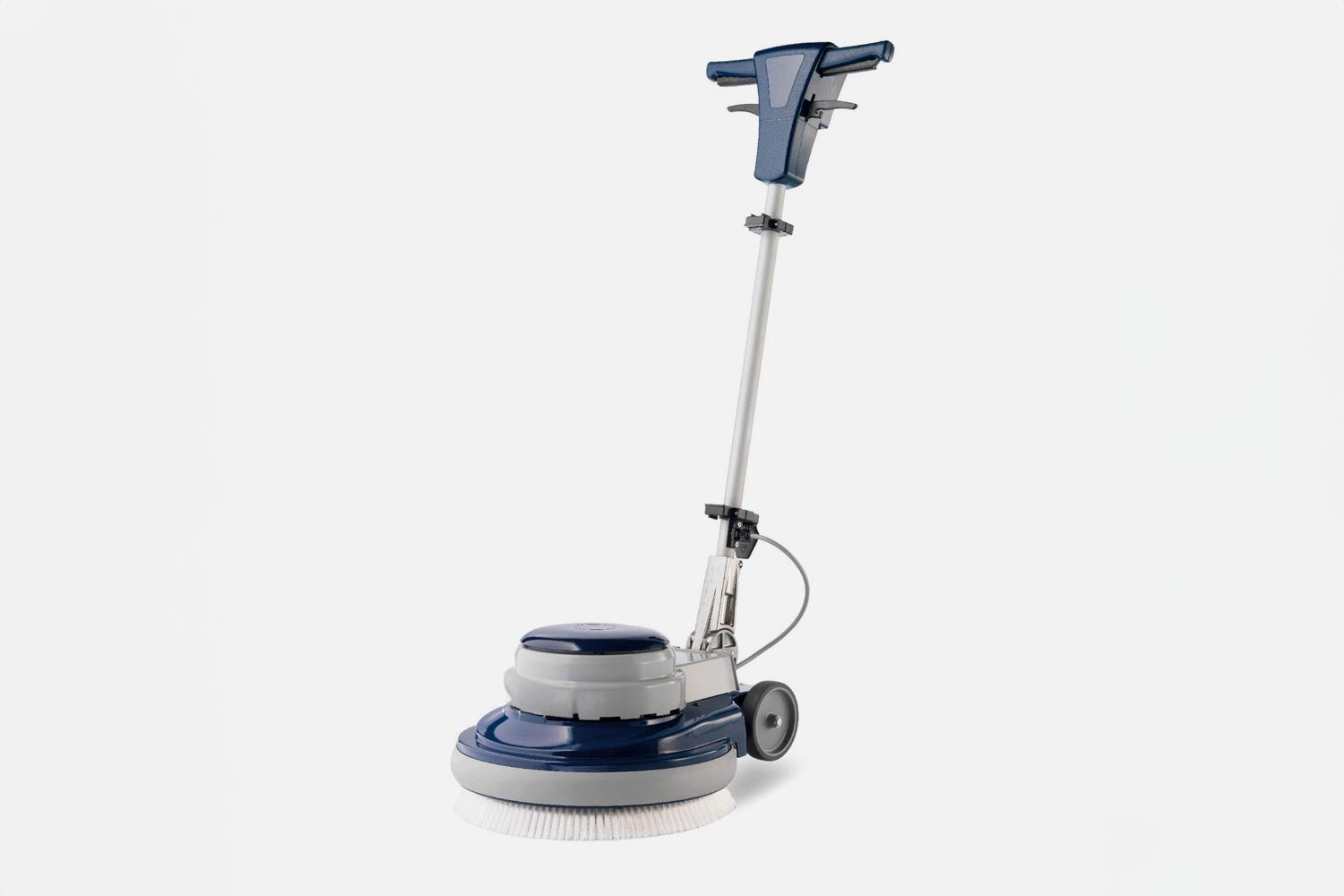
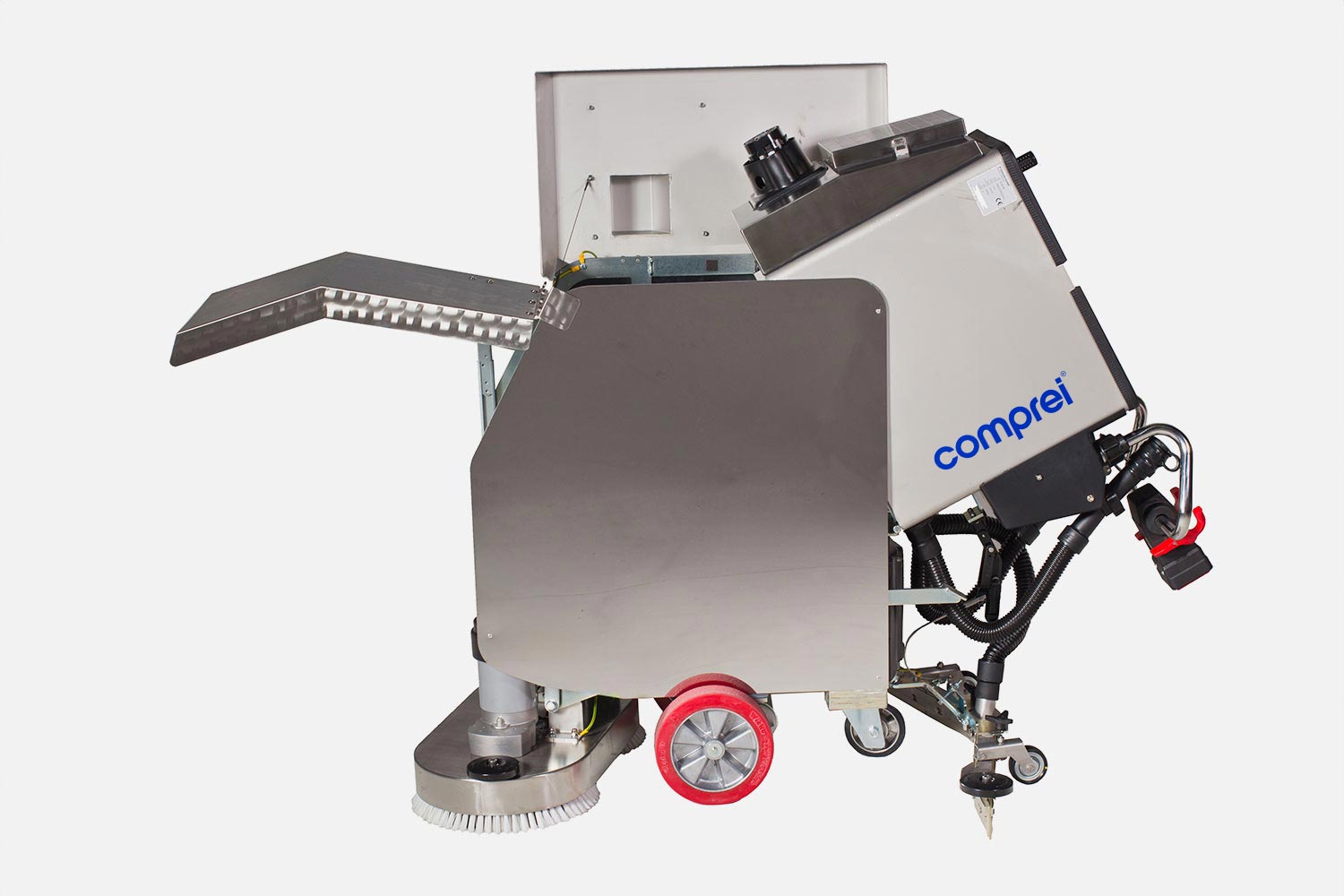
The following machines are available for automated cleaning applications in cleanrooms and their functions are explained in this article:
The following points should be clarified before choosing the right appliance:
Once these points have been clarified, the selection of a suitable device can begin.
Let's start with dry items that should be vacuumed (e.g. drilling dust when a hole is drilled or lint in a cleanroom laundry - beware of acute fire hazard!) Many cleanrooms have a stationary extraction system, which is always preferable to a mobile solution as the exhaust air no longer pollutes the cleanroom. However, as not every cleanroom has a stationary system, there are various devices for use in the different cleanroom classes. The exhaust air from the vacuum cleaner must be treated to such an extent that it corresponds to the ambient air and does not pollute it. This is why most cleanroom vacuum cleaners have an exhaust air HEPA filter.
The simplest version is a dry vacuum cleaner in which the sucked-in air is fed through a filter system (dust bag plus multiple filter) and then cools the suction turbine. Before the exhaust air is fed back in, a HEPA filter is installed to capture particles. Conventional boiler vacuum cleaners with carbon brushes and a HEPA filter are suitable for low cleanroom classes. Vacuum cleaner turbines with carbon brushes cause abrasion during operation, which must be captured by a downstream HEPA filter.
For higher cleanroom classes, the use of carbon-free motors with an encapsulated design is recommended, as these cause significantly less abrasion. Depending on the quantity of vacuumed material, there are vacuum cleaners with a cyclone separator (suitable for larger quantities of vacuumed material). A dust bag is often sufficient for smaller quantities. Side channel blowers are suitable for continuous operation and are often installed in stationary systems. They can also be operated via a compressed air turbine, which makes them ideal for use in EX zones.
For "wet goods" or liquids, a different design than the vacuum cleaner described above must be selected. In a vacuum cleaner, a motor drives two turbines, one to generate the suction air and one to cool the turbine. Never use a dry vacuum cleaner to vacuum wet items. Wet vacuum cleaners collect the vacuumed material in a container under the vacuum cleaner. Castors and a lifting device are helpful depending on the volume. An automatic shut-off device (depending on the model) switches off the turbine when the maximum filling volume is reached. Simpler models have a float and close the opening to the suction turbine (can be heard acoustically due to a higher speed). Depending on the model, the exhaust air is routed through a HEPA filter so as not to pollute the ambient air. Encapsulated electric motors are also available.
Compressed air-operated models can have a simpler design, but require a constant compressed air supply of cleanroom-compatible quality (is the appropriate compressor available, is the compressed air oil/water-free?).
Attention should be paid to the selection of suitable accessories, as these can make work significantly easier or more difficult. The accessories must be resistant to the chemicals used and, if necessary, electrically conductive. If the accessories are used in sterile areas, they must be autoclavable and withstand this process several times.
A stationary extraction system including fixed piping with suction sockets is usually the better choice. If this is not possible, the filter class of the vacuum cleaner must correspond to the cleanroom class in which it is to be used. As an expert in contamination control in cleanrooms, comprei will be happy to help you make the right choice!
Single-disc machines are used when increased pressure is required on the cleaning elements (pad or brushes). According to the Sinner's circle, the cleaning effect is improved by increasing the mechanical action. As with vacuum cleaners, a few points need to be clarified in advance (see above). Once these points have been established, the selection process can begin. The single-disc machines available on the market are very limited for this application. There are classic single-disc machines with carbon brush motors, which distribute fine carbon particles in the room via the exhaust air. The use of classic single-disc machines in cleanrooms should therefore be viewed critically.
In some areas, you will not be able to avoid using it, so we recommend cleaning with a single-disc machine as part of a conversion or maintenance work (during a shutdown). Fine cleaning should then be carried out. For use in less sensitive areas, an air-powered single-disc machine can be used.
Different colored pads and brushes are available. All cleaning tools release particles during use. Fine cleaning after use is therefore essential. Depending on the floor surface, brushes have an advantage on uneven surfaces such as tiles with joints and very non-slip floors, whereas pads have an advantage on smooth surfaces. The color of the pad indicates its aggressiveness (the darker the more aggressive, white is very soft, black is very hard and contains abrasive grit). This results in the use of light-colored pads if you want to polish the floor. This has the advantage that the floor is easier to clean later (the mop glides more easily over the floor) and there is less surface area for germ growth.
A single-disc machine is only suitable for use in cleanrooms to a limited extent, as basic cleaning of both the ceiling and the walls is unavoidable after use. Its use should therefore be carefully considered. As an expert in contamination control in cleanrooms, comprei will be happy to help you with this.
Automatic cleaning machines or floor scrubbing machines are suitable for ongoing maintenance cleaning. As these combine the advantages of increased pressure (= mechanics) and the vacuuming up of dirt, the result is significantly better than manual cleaning.
Annex 1 point 5.19 states: "Cross-contamination should be prevented by the design of premises and equipment as described in Chapter 3 (Note: Annex). This should be supported by attention to process design and the implementation of any relevant technical or organizational measures, including effective and reproducible cleaning processes to control the risk of cross-contamination."
Not only do automatic cleaning machines clean more thoroughly and evenly than manual cleaning, they can also clean 7 times more surface area in the same amount of time. Non-slip floors are also usually easier and more thorough to clean with an automatic cleaning machine than manually. If you bear in mind that labor is an important cost factor, the purchase of a suitable automatic cleaning machine can be an interesting option. It should be noted that cleaning close to the edge as well as the adjusted area usually has to be pre-cleaned or re-cleaned by hand. An automatic cleaning machine therefore complements the cleaning concept, but does not completely replace traditional manual cleaning.
There are a few points to consider when choosing an automatic cleaning machine:
In general, the operation of an automatic cleaning machine can be described as follows: The cleaning liquor is prepared in a tank before starting work, i.e. the machine is filled with water of the required purity (corresponding to the required cleanroom class) and a desired cleaning agent or disinfectant is added. Care must be taken to ensure that these agents are suitable for automatic use (no foam may be produced in either the clean tank or the dirty water tank, as this would damage the suction turbine). The cleaning solution is fed to the working element via a solenoid valve or a pump.
The working element must be matched to the surface to be cleaned. Non-slip floors and/or tiled floors with joints can be cleaned more efficiently with roller elements, while better results are achieved on smooth floors with disc brushes or pads. The working elements must be cleaned after each use and stored so that they can dry before the next use. Care must therefore be taken to ensure easy disassembly/assembly. The dirt is sucked up by a suction bar and collected in a separate tank. As a rule, the dirty water tank has a slightly larger volume, as any liquids present on the floor should also be collected. The suction bar must also be dismantled and cleaned after each use.
The necessary negative pressure is generated by a suction turbine, which is usually driven by a classic carbon brush electric motor. The standard version of this releases carbon dust into the environment, which makes it unsuitable for use in clean rooms. Encapsulated motors or ignition source-free motors are therefore used here. The effluent from the dirty water tank should also be fed into the ambient air via a HEPA filter. This HEPA filter must be changed regularly so that the cleanroom is not contaminated.
The cleaning machine should be serviced by a specialist company at least once a year to ensure that the cleaning results remain satisfactory. The working elements and the rubber lips on the suction bar should be checked for wear and replaced more frequently.
Depending on the area to be cleaned, there are different sized cleaning machines (brush width = cleaning width, tank volume, battery capacity, etc.). Due to the parameters explained above, it should be mentioned in conclusion that a machine suitable for use in a hospital cannot usually be used in a cleanroom.
Cleanrooms have a controlled particle, humidity and temperature range, so it is very rare to find an application for a high-pressure cleaner. In a few cases, however, the advantages of cleaning with a high-pressure cleaner can be clear, for example when greasy or pasty residues need to be removed. Here, a high-pressure cleaner can achieve thorough cleaning quickly and efficiently. In most cases, large quantities of liquids are already present in these cleanrooms due to the production process, so the amount of liquid introduced by the cleaning process with the high-pressure cleaner is lower than with conventional cleaning. It should be noted that most commercially available high-pressure cleaners are driven by a carbon brush electric motor, which emits many particles during operation. A stationary system outside the cleanroom is therefore preferable.
It is recommended to install fixed piping with tapping points in the clean room and to select the high-pressure hose in the desired quality and non-marking. The high-pressure lance should be made of stainless steel. Most food-grade appliances are not or only partially suitable for cleanrooms. In this case, a precise check of the cleanroom suitability should always be based on the cleanroom class in which the high-pressure cleaner is to be used.
There are areas of application in the cleanroom where a high-pressure cleaner can be useful. If possible, the installation of a stationary system outside the cleanroom with fixed piping should be checked. If this is not possible, the high-pressure cleaner should preferably be operated in a lower cleanroom class (e.g. aisle). As an expert in contamination control in cleanrooms, comprei will be happy to advise you on your choice.
For the automatic decontamination of cleanrooms and clean areas.
A cleanroom may be out of operation for a short or long period of time for a variety of reasons, for example due to:
In order to be able to resume operations, the required limit values must be reached again as quickly as possible. Decontamination of cleanrooms involves considerable effort. This effort can be kept to a minimum through good emergency planning and fast response times. The safe operation of a cleanroom represents a high financial outlay.
Contamination in cleanrooms/cleanrooms can spread very quickly and cause long production downtimes. This often results in the disposal of contaminated products, in addition to the incalculable financial consequences and the loss of the established image.
Good emergency planning, fast response times and careful and complete documentation are therefore very important in order to be able to resume operations as quickly as possible in the event of contamination.
The following methods are available for decontamination:
Each of the methods mentioned has its advantages and disadvantages:
After use, H2O2 decomposes into water and oxygen and leaves very little residue. H2O2 has very good material compatibility.
Formaldehyde has a very wide range of applications but must be neutralized after fumigation. Formaldehyde has been classified as carcinogenic to humans since 2004. This active substance and its residues are toxic to humans.
UV-C irradiation is mainly used in the healthcare and foodcare sectors. A not insignificant factor is the shadows (surfaces that cannot be irradiated directly), which have to be cleaned manually during UV-C irradiation.
For the reasons mentioned, we would like to limit ourselves here to H2O2 fumigation. Below you will find a description of the advantages and disadvantages and how H2O2 fumigation is carried out:
Bioquell's Rapid Bio-Decontamination Service (RBDS ) is a complete solution for decontamination using hydrogen peroxide vapor to remove microorganisms from the environment. As a rapid deployment plan is drawn up in advance together with the customer on site and is easily and flexibly integrated into SOPs, maintenance plans or emergency plans, this system can be used to react quickly to sudden events or to plan recurring decontamination processes with as little downtime as possible.
Whether the devices required for use are brought along by the service team or placed directly on site at the customer's premises is clarified in the preliminary discussions, depending on possibilities and requirements. Each use of the RBDS is validated with bioindicators to ensure a reduction in the total bacterial count by 6 log levels.
The necessary documentation for these operations is available in a short time so that the resumption of operations in the cleanroom can be approved or official controls, inspections or requalification audits can be completed promptly.
An additional advantage of this system is that adjacent areas can continue to be used without restrictions. The entire environment of the contaminated area is regularly checked during the process by means of safety measures and controls.
Examples show that it is possible to decontaminate room sizes of 100,000 m³ with the RBDS system.
As the inventory can remain in the room during fumigation, there is no risk of recontamination occurring as a result of the transfer in and out. Only internal areas of machines and equipment can be decontaminated.
Machines in the cleanroom can make cleaning more thorough, efficient, reproducible and cost-effective than manual cleaning. But machines can also contaminate the cleanroom, as the saying goes:
"Cleaning can also be a source of contamination!"
Choosing the right tool is therefore essential. Just as every cleanroom differs from other cleanrooms in many ways, the use of a machine can be an advantage in one case and a disadvantage in the next. A profound knowledge of cleanrooms is essential here. comprei has gathered this knowledge over many years of experience and is happy to make this experience available to you.
As an expert in contamination control in cleanrooms, comprei will be happy to advise you on whether automated cleaning is preferable to manual cleaning.
News and Press
comprei remains committed to Austrian disabled sports in 2026
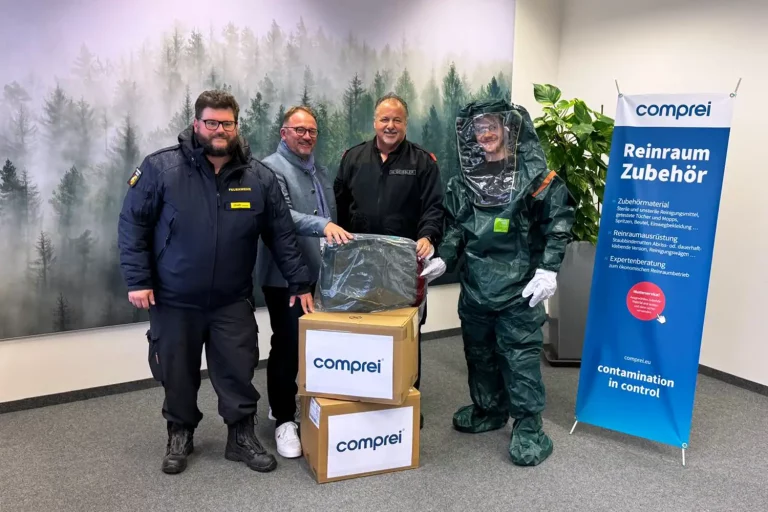
comprei enhances the safety of the Villach Fire Department
Social sustainability at comprei: Social sustainability that works
comprei strengthens the presentation skills of its trainers.
comprei is now one of Europe's best employers.
Villach's mayor, Günther Albel, visited the company.
Purchase your discounted ticket and meet us live on site.
1st place for comprei from Great Place to Work - "Best Workplace Austria".
Focus topic: Annex 1 of the GMP guidelines and the Contamination Control Strategy
• Villach headquarters
+43 4242 – 44075
office@comprei.eu
• Learning Solutions
+43 4242 – 44075-60
ausbildung@comprei.eu
• Clean Services
+43 4242 – 44075
dienstleistung@comprei.eu
• Clean Consumables
+43 4242 – 44075-10
vertrieb@comprei.eu
All rights reserved. Information and content provided by
comprei Reinraum-Handel und Schulungs GesmbH.
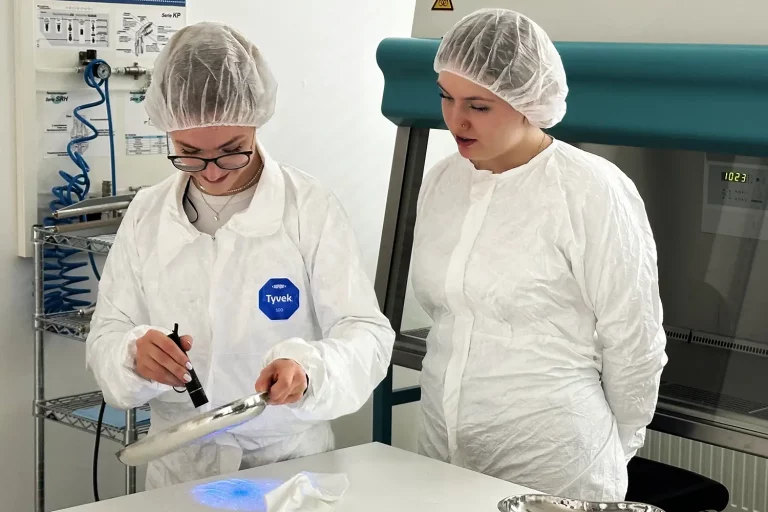
Realistic simulations and visualizations of activities make invisible connections visible. Learners experience their own impact in the cleanroom right in the middle of the action. They experience in-depth sensitization that becomes firmly anchored.