Cleanroom accessories: Cleaning equipment

Contents

The regulations for the operation and maintenance of cleanrooms are becoming increasingly detailed. As their cleaning processes subsequently influence product safety and quality and are often scrutinized during audits, we see it as our task to be able to offer our customers a safe and reproducible cleaning concept. The "hardware" (scales, mop handles, etc.) plays a role that should not be underestimated. Manual cleaning is a craft and requires professional equipment in order to be carried out optimally. Ergonomics and the right choice of accessories play a decisive role in the effectiveness and motivation of cleaning staff. Here you can see a list of different cleanroom cleaning equipment. This can help you choose the right equipment.

This includes the following cleanroom cleaning equipment:

  • Cleaning trolleys and accessories
  • Tubs and boxes
  • Flat and jaw presses
  • Mop holders and handles
Classic cleaning trolleys with wringing/pressing devices are still in use, but are gradually being replaced by new innovative cleaning systems that allow a reproducible cleaning and application process (uniform impregnation of each mop). This is the only way to ensure consistent, hygienic and microbiological process reliability.
comprei, Ergo with humidifier from Hydroflex

Cleaning trolley

Material:

  • Stainless steel: Electropolished, ideally made of V4A, recommended from ISO cleanroom class 5 and GMP A/B
  • Plastic: Suitable for ISO cleanroom classes 8-6 and GMP C/D
  • Anodized aluminium: Lightweight, but only partially resistant to chemicals and autoclavable
  • Carbon: Very light

The choice of material is defined by the operating conditions. The aim is to ensure a safe, validated and reproducible cleaning process with the right cleaning equipment. It should be noted that not every stainless steel cleaning trolley is suitable for use in the cleanroom; cleanroom trolleys for the cleanroom must have a hygienic design (minimization of cavities and dead spaces).

Execution:

Depending on requirements, there are different designs that have their advantages and disadvantages.

  • Mop dispensing system: Contactless, reproducible and ergonomic
  • Pre-preparation / box systems: Manual mop moistening; not every mop is evenly moistened
  • Flat press system: The pressing result can vary greatly, therefore only suitable for lower cleanroom classes
  • Double bucket: Cross-contamination is difficult to rule out, therefore only suitable for lower cleanroom classes

Summary

The higher the cleanroom class, the higher the requirements for the cleaning equipment. Our recommendation is therefore to use a stainless steel cleaning trolley with a mop dosing system for cleanroom classes ISO 3-5 and GMP A-B. Plastic cleaning trolleys can also be used for cleanrooms of lower classes.
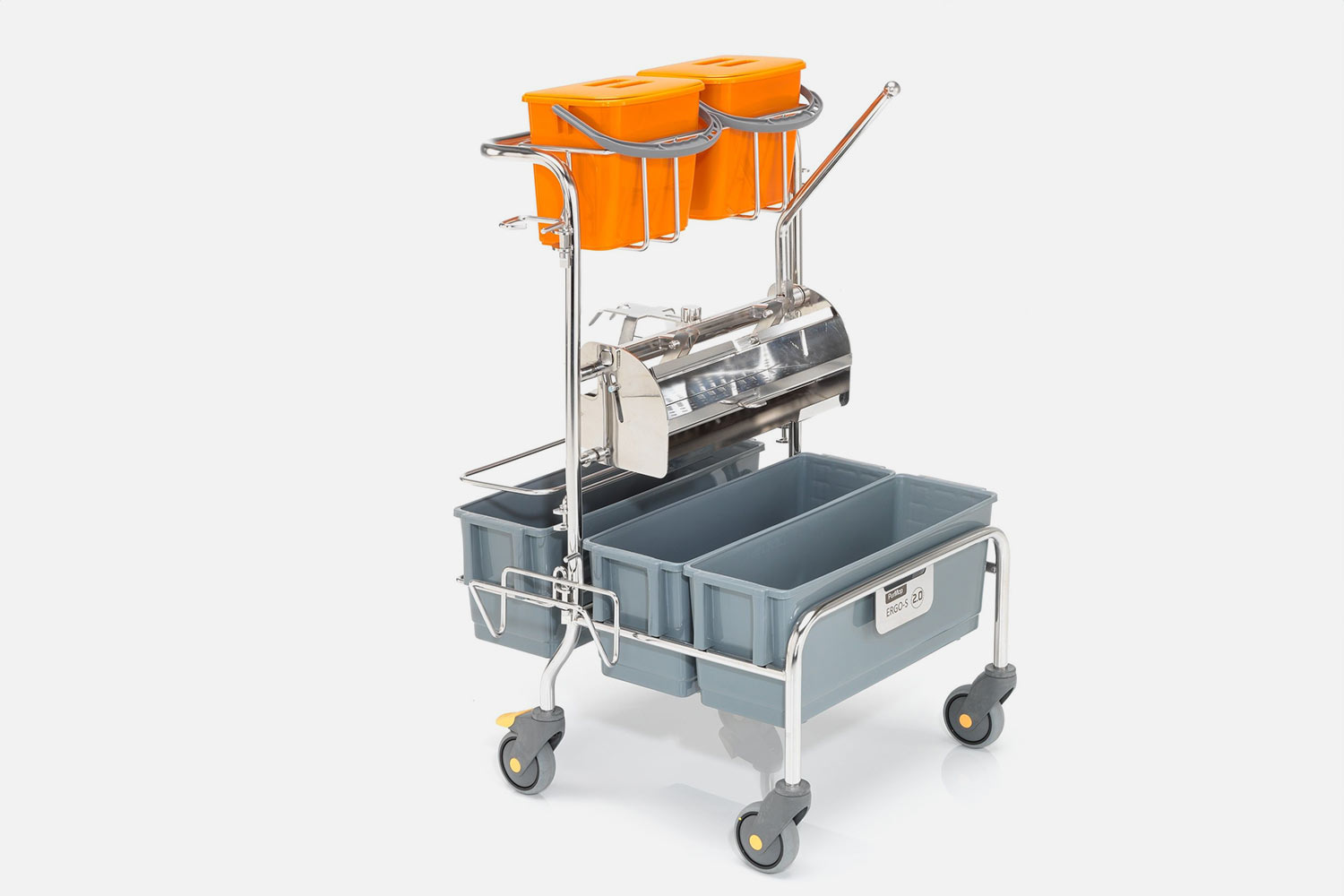
Cleanroom cleaning trolley with mop dosing system

Material:
  • Stainless steel: Electropolished, ideally made of V4A, recommended from ISO cleanroom class 5 and GMP A/B
  • Plastic: Suitable for ISO cleanroom classes 8-6 and GMP C/D
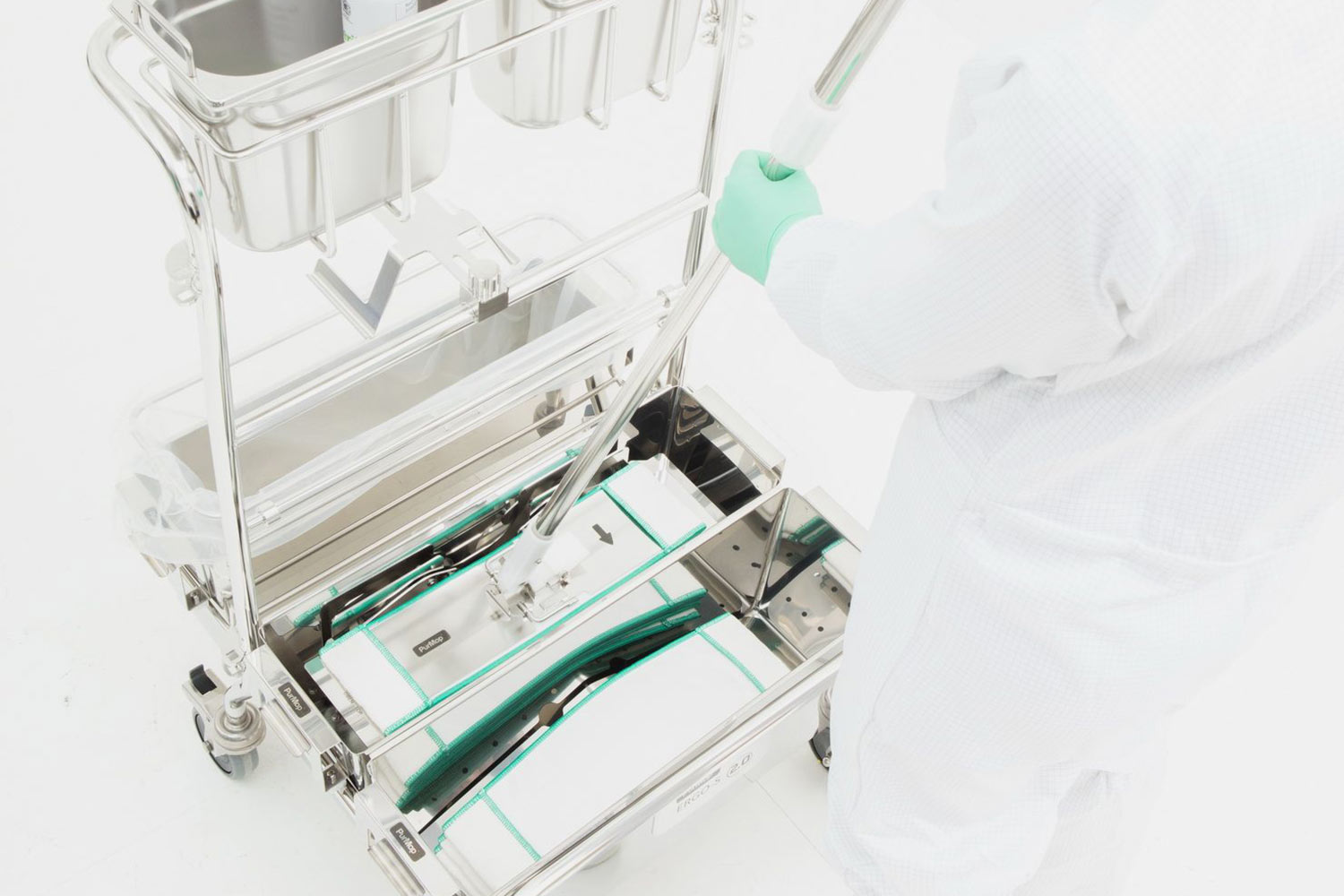
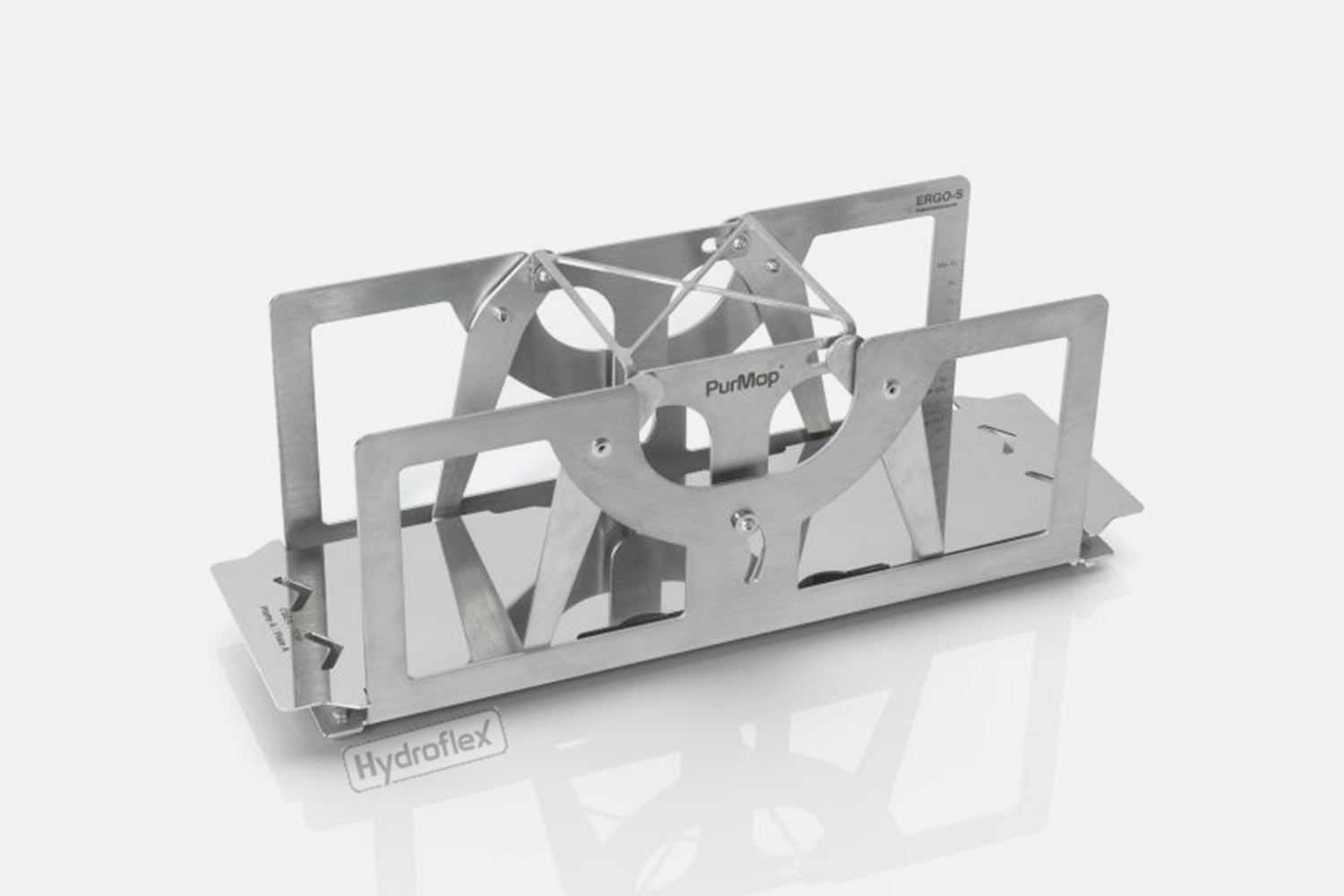
Execution: There are various cleaning trolleys with tubs that can be operated with or without a mop dosing system. In order to generate the benefits of mops that are moistened exactly right, we recommend the use of a mop dosing system. This enables identical soaking even when used by different users. A suitable description of the cleaning trolleys without a mop dosing system can be found in the Tubs/presses/box systems section. The PurMop® ERGO mop dosing unit was developed to ensure effective and safe cleaning and/or disinfection of cleanrooms. It is easy to use and provides user-independent results with minimal effort. Made of polished stainless steel and equipped with special plain bearings, the robust unit is permanently autoclavable and easy to clean. Below you will find a description of the advantages of a mop dosing system: This has been tested by our cleaning teams under a wide variety of conditions and the results have been very good. We are therefore happy to recommend it! Touching used mop covers and contaminated cleaning equipment such as mop holders carries a high risk of spreading contamination in the cleanroom. PurMop® ERGO enables completely touch-free operation of the cleaning trolley in just 3 steps, namely:
  1. Picking up the fresh mop: The mop support enables contact-free picking up of the fresh mops without bending down.
  2. Dosing: By pressing the dosing device, the previously selected amount of liquid is applied to the mop and evenly distributed within a few seconds.
  3. Cleaning and/or disinfection: The correctly moistened mop is passed over the surface to be cleaned or disinfected, leaving an even film of liquid behind. This is necessary to check the maximum area to be cleaned.
  4. Discharge of the used mop: The used mop is discharged without contact by means of the further optimized discharge device (optionally on the front or rear of the trolley).
You can watch the described procedure on a video (external link: Youtube): www.youtube.com/HydroflexDE

Advantages of the mop dosing system

  • Precise: Define the optimum amount of liquid for your requirements and the appropriate dosing plate (available in 4 variants from 100 to 200 ml). The dosing plate can be replaced in one easy step.
  • Unique: Dosing is extremely simple: With the mop in place, the trigger of the dosing unit is operated. With the help of the special transmission mechanism, the dosing plate applies the defined amount of liquid to the mop. After just a few seconds, the mop is fully saturated and the process is complete.
  • Savings: Comparison of ERGO system with alternative systems (e.g. UNO / DUO flat press)
    • Up to 40 % less disinfectant/cleaning agent and water
    • Up to 30 % time saving
    • Reduction of environmental pollution
    • Significantly less effort required

Summary

The intelligent dosing of the mop dosing system is characterized by reproducible results and the avoidance of excess liquid. It guarantees gentler and more ergonomic work for users and also prevents unnecessary contact with cleaning and disinfection liquids, which also contributes to occupational safety. The advantages for the cleanroom result from the fact that contactless working reduces the risk of contamination to a minimum. In addition, discrepancies in the wetting performance of surfaces are effectively counteracted, as a uniformly soaked mop is always available.
comprei, PurMop Mop Wetting Device FBE50

Tubs / presses / box systems

Manual cleaning of floors, ceilings and walls takes the most time due to the total area of the cleanroom. In addition, the different room sizes present the user with the question of which system (trays / presses / boxes) is both practical and efficient for their daily work.

Materials, equipment and cleaning products must be user- and environmentally friendly, qualitative and reliable and also offer a good price-performance ratio. The cleaning and disinfection results must justify the time, effort and acquisition costs.

Avoiding cross-contamination plays an important role in cleanroom cleaning. We have numerous solutions for this in our product range. Although the use of tank systems has been "state of the art" for decades, various manufacturers are constantly striving to develop and innovate in order to offer cost-effective and user-friendly products.

Material:

  • Plastic trays: Characterized by their light weight. Plastic is a good choice for GMP cleanrooms C-D and ISO 6-8. Conditionally autoclavable.
  • Stainless steel: Characterized by very low particle emission and high chemical resistance. Fully autoclavable. Recommended for cleanrooms from ISO 5 and GMP A/B.

When selecting the trolley, make sure that all parts can be dismantled easily (without the use of tools) and individually (for easier cleaning, autoclaving and transfer).

Decisions need to be made regarding the choice of materials with a view to protecting the environment and conserving resources. Even if investing in high-quality materials puts more strain on the budget in the short term, the long-term service life of the equipment should be taken into account and play a role in the purchasing decision.

Tub systems / Prepare

The aim is to pre-soak the mops to be used as easily as possible. One tray is used to hold fresh mops, while a second tray is used to drop the used mops. This variant is ultra-compact, requires little storage space and is therefore suitable for smaller rooms and less sensitive areas.

Cleaning systems with flat press

We offer a wide range of cleaning trolleys with a press - from compact 1-bucket systems to 3-bucket systems. The press systems can be used for various cleaning tasks, such as a two-stage wiping process, simultaneous work with cleaning agents and disinfectants or for disinfection without changing mops. With 1- and 2-bucket systems, one mop change is required. Each mop is only soaked and used once. After wiping the predefined area (18-15 m²), the used mop is changed. Contact between the used mop and the fresh liquid should be strictly avoided to prevent the risk of cross-contamination.

Our range includes innovative solutions such as

  • A special power transmission mechanism that enables more pressure to be applied to the mop with less effort for the operator.
  • The press is designed so that the same force is applied every time it is used. This enables reproducible impregnation values and therefore consistent area output.

Box systems

Working with a box system is recommended for a one-step wiping process. The defined number of wipes and quantity of cleaning or disinfectant solution in the box ensures a uniform disinfectant film on the surfaces and ensures the high and exact reproducibility of the work steps.

Advantages:

  • Efficient and ergonomic handling is simple and easy to train.
  • The box system is a closed system. The cleaning or disinfectant solution and the mop covers are in the box and are only removed when used.

Disadvantages:

  • A disadvantage is the handling, as a box with a corresponding number of covers has to be replaced if the mop covers are not sufficient for the intended cleaning area.
  • Lifting and carrying boxes requires a certain amount of strength.

Summary

When selecting suitable cleaning equipment, we recommend ensuring that the individual components are easy to clean or disinfect after use. It is important that the materials used are suitable for the respective GMP or ISO cleanroom. This enables you to meet the required status in your cleanroom.

Practical and ergonomic equipment helps employees to carry out their work more easily and therefore increases their motivation. Daily work can be carried out properly and without additional effort. It is crucial to involve the user as early as possible in the decision-making process regarding the equipment to be purchased.

Thanks to our many years of cooperation with renowned manufacturers and our own experience in

With over 20 years of daily cleaning in various cleanrooms, we are able to provide you with the best possible support in this selection process.
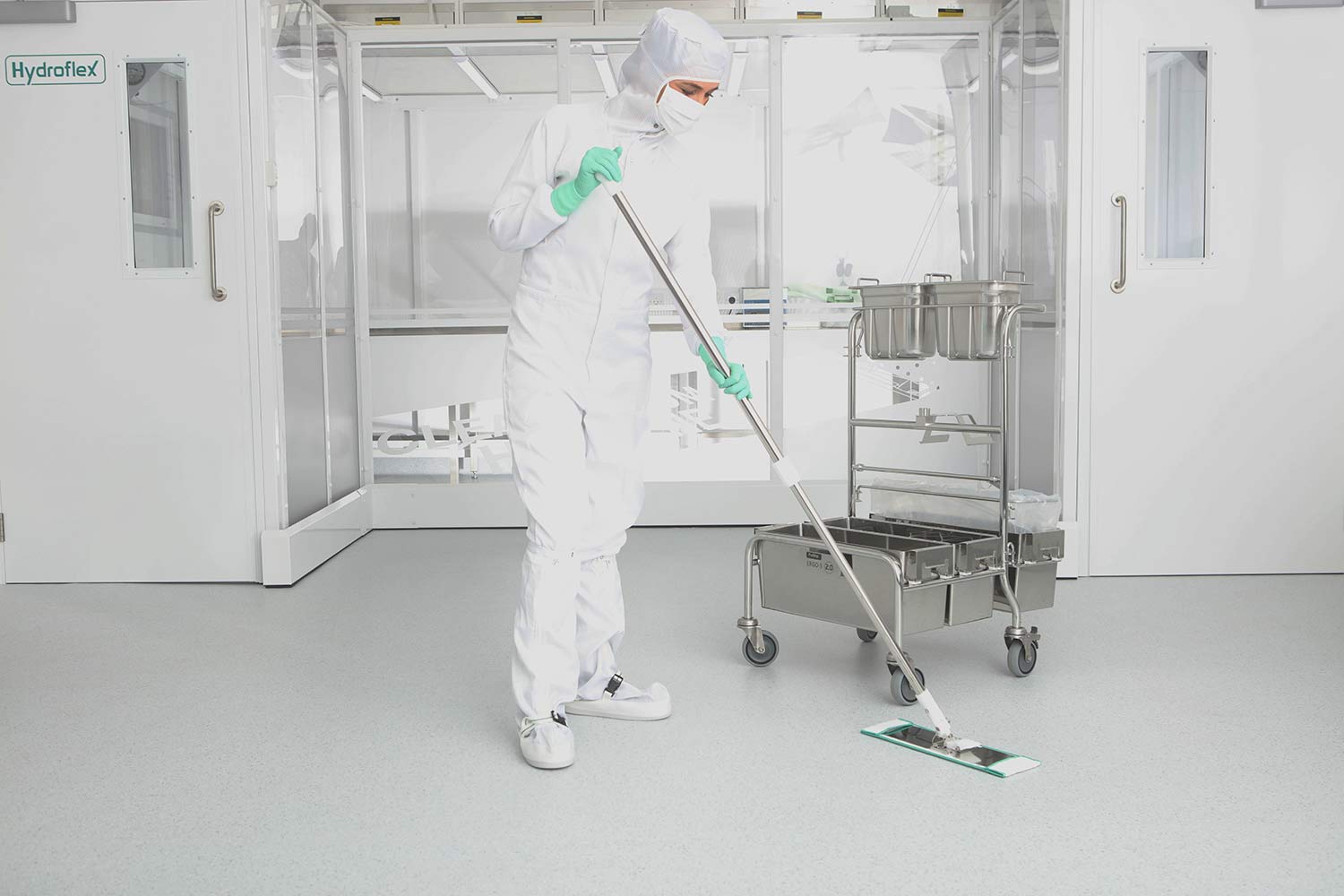
comprei, PurMop Ergo S-230 in use

Mop holders and handles

Material: Whether made of stainless steel, aluminum, plastic or carbon, cleanroom-compatible processing and sophisticated functionality are important. Smooth stainless steel surfaces ensure GMP conformity and resistance to the autoclaving process. Depending on the area of application, the choice of material and the associated weight play a role. For example, a stainless steel mop pole supports the cleaning performance during floor cleaning due to its own weight. For comparatively strenuous cleaning of ceilings and walls, lighter aluminum could be used. Various manufacturers offer systems that make it easy to change mop rails and holders.
  • Stainless steel is characterized by very low particle emission and high chemical resistance. Fully autoclavable. Recommended from ISO cleanroom class 5 and GMP A/B.
  • Plastic and aluminum are characterized by their light weight. Plastic is a good choice for GMP cleanrooms C-D and ISO 6-8. Conditionally autoclavable.
  • Carbon, very light.

Cleanroom furniture (furniture)

How do you recognize cleanroom-compatible furnishings or furniture? Here you will find information to help you select suitable furniture.

Summary

We recommend paying attention to the cleanroom class in order to make the right choice of cleaning equipment. To ensure efficient and ergonomic use, we recommend using adjustable/telescopic handles. Ask for individual advice - we will provide you with samples to help you make the right choice of cleaning equipment. The success factor lies in the involvement of users in the selection of suitable equipment. Personnel who will later work with the selected cleaning equipment can provide decisive input and are integrated into the selection process.

Working with a box system is recommended for the one-step wet wiping process. The defined number of wipes and quantity of cleaning or disinfectant solution in the box ensures a uniform disinfectant film on the surfaces and ensures the high and exact reproducibility of the work steps. The efficient and ergonomic handling is easy and comprehensible to train. Another advantage: the box system is a closed system. The cleaning or disinfectant solution and the mop covers are stored in the box and are only removed when they are used. A minor disadvantage is that a new box with a corresponding number of covers has to be used if the wipe covers are not sufficient for the intended cleaning area.

The wet wiping process using the two-stage method is carried out with a double bucket and press. It is suitable for production areas with adhering dirt that cannot be removed using the one-step wiping method. In the two-stage wet mopping process, the cleaner applies the liquid to the floor covering in the first step so that adhering dirt is softened or removed. In the second step, the loosened dirt and excess liquid are removed. Detailed training is required to work correctly in the two-stage wet mopping process in order to ensure safe handling and therefore reproducibility with consistent quality.

When selecting cleaning equipment, it is important that the individual components can be easily cleaned or disinfected after use. According to the manufacturer's specifications, the materials used should be suitable for the respective GMP area. In the pharmaceutical sector, for example, these are cleanroom-compatible stainless steel and special plastics. All surfaces should be as smooth as possible and have no corners or edges.

Advice / sample service

Learning solutions for the pharmaceutical industry, GMP

Clean room cuboid

Realistic simulations and visualizations of activities make invisible connections visible. Learners experience their own impact in the cleanroom right in the middle of the action. They experience in-depth sensitization that becomes firmly anchored.